A REVIEW OF THE TRANSFORMATIVE ROLE OF ARCHITECTURE IN DRIVING INNOVATION, ENTREPRENEURSHIP AND GROWTH IN NIGERIA
- KOEBEC
- 0 Comments
By
Chidera Amobi1
Chinwe Sam-Amobi2
2chinwe.sam-amobi@bazeuniversity.edu.ng
Abstract
This article examines the future of architectural practice in Nigeria, and the role of architects as entrepreneurs. By focusing on designing for both formal and informal economy, mixed-income communities, and adaptive reuse, architects can exceed their traditional roles as service providers to become entrepreneurs and innovators, by designing for inclusivity. In exploring the intersection of entrepreneurship, inclusive design, and the built environment, and drawing on key theoretical frameworks and contextualising them within Nigeria’s urban realities, it concludes that inclusive design can enhance economic potential, foster social cohesion, and position the Nigerian architect as a primary driver of sustainable, indigenous economic development.
.
Keywords: inclusive design, architecture, informal economy, adaptive reuse, entrepreneurship.
1. Introduction
Entrepreneurship and innovation are widely recognised as central drivers of economic growth, structural transformation, and societal development. In rapidly urbanising contexts such as Nigeria, these processes are deeply intertwined with the production and organisation of the built environment. Cities are not merely sites where economic activities occur; they actively shape the conditions under which entrepreneurship emerges, evolves, and scales. The built environment comprising physical infrastructure, spatial configurations, and urban form plays a critical role in mediating access to resources, networks, and opportunities.
Several studies confirm that entrepreneurship and innovation are as fundamental drivers of economic growth, contributing to job creation, productivity improvements, and long-term development (Sedeh et al., 2022; Liu et al., 2025; Dote-Pardo et al., 2025). In Nigeria they are major pillars of economic growth and contribute significantly to employment generation, poverty reduction, and economic diversification (World Bank, 2020; National Bureau of Statistics, 2022). According to Adeleye et al 2020 and Oguabor & Malaolu 2013, the expansion of entrepreneurial activity within Nigeria’s large informal economy has been identified as a key mechanism for stimulating innovation, enhancing productivity, and fostering economic development though without broad-based inclusion.
Nigeria with a population projected to reach 400million by 2050, the demand for infrastructure and housing is very high (UN Habitat,2022). Architectural response to this growth has been rigid lacking diversity. The ingenuity of the Nigerian people manifests in the informal sector of every major city representing huge, untapped reservoir of economic energy though socially and economically unsustainable. This has created a strong urban inequality with formal developments such as central business districts, gated communities, and high-rise commercial buildings in contrast to informal unplanned settlements and markets. The sprawling markets and informal settlements represent locally adapted spatial responses to economic necessity and social conditions inequalities. These dual spatial systems are not isolated but interdependent. Informal markets, for instance, provide essential services and employment opportunities, often supporting the functioning of formal economies. Yet, they are frequently marginalised in planning frameworks, leading to spatial conflicts and inefficiencies. This tension highlights the need to reconceptualise the built environment as an integrated system that accommodates diverse forms of economic activity.
Architectural response to the growth has also been largely one-sided focusing on a small elite group. To harness this, a new architectural paradigm is required, one that views inclusivity not as a charitable gesture, but as a design strategy for innovation and wealth creation. By designing spaces that accommodate the full spectrum of Nigerian society, architects can catalyse entrepreneurship and build the physical framework for a more balanced and diversified economy. Nigeria’s rapid urbanisation simultaneously offers a unique opportunity to embed inclusive architectural strategies into emerging infrastructure projects (Obianyo et al., 2021). Recent studies emphasize that inclusive design is no longer optional but foundational to modern architectural practice (Howe & Martel 2024; Shkliar & Shushliakova, 2023). Adegoke and Mohamed Khaidzir (2024) observe, the lack of sustainable and equitable housing in Nigeria stems partly from limited implementation of architectural design interventions, with many professionals lacking sufficient knowledge of inclusive and universal design principles.
Methodology
This study employs a thematic literature review using peer-reviewed journal articles, urban development reports, and foundational texts in architectural theory. Sources were selected based on their relevance to four principal thematic domains: (a) inclusive design principles and universal accessibility, (b) spatial dynamics of the informal economy in Nigeria, (c) limitations of conventional housing and urban planning models, and (d) emerging paradigms of architectural entrepreneurship.
Academic databases consulted included Scopus, JSTOR, ResearchGate, Google Scholar. The search strategy employed keywords such as inclusive architecture Nigeria, informal economy urban design, and architectural entrepreneurship.
Literature Review
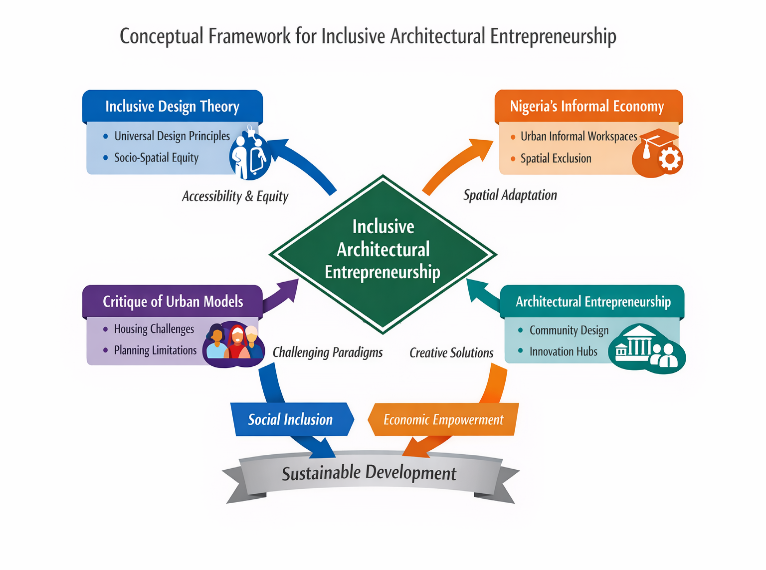
Figure 1 Conceptual Framework for Inclusive Architectural Entrepreneurship.
Source: Authors proposal 2026
Fig 1. illustrates the interrelationship between four thematic domains, Inclusive Design Theory, Nigeria’s Informal Economy, Critique of Urban Models, and Architectural Entrepreneurship. The framework emphasizes how accessibility, spatial adaptation, paradigm shifts, can promote social inclusion and economic empowerment, ultimately supporting sustainable development.
Theoretical Foundations of Inclusive Design
The concept of designing for diversity has evolved significantly over the past decades. The concept was made popular by Ronald Mace framed as Universal Design, the focus was on removing physical barriers for people with disabilities (Roubeena Jeetah 2022). The seven principles of Universal Design equitable use, flexibility in use, simple and intuitive use, perceptible information, tolerance for error, low physical effort, and size and space for approach and use established a foundational framework (Connell et al., 1997). Universal Design has been criticized for its Western based assumptions and its limited engagement with broader social and economic dimensions of exclusion. According to Imrie (2012) Universal Design does not address the socio-spatial complexities of cities, where exclusion is more about economic marginalization as it is about physical accessibility. This critique has given rise to the more extensive concept of Inclusive Design, and the British Standards Institute (2005) defines inclusive design as the design of mainstream products and services that are accessible to, and usable by, as many people as reasonably possible, without the need for special adaptation or specialized design.
Inclusive Design in the African Context
According to Watson (2014), African cities function according to their own distinct dynamics, differing from Western urban models. African cities are characterized by informality, mobility, and temporality. African cities operate with their own distinct energy, deviating from traditional Western urban frameworks (Simone, 2004). Applying inclusive design principles therefore, to African urbanism requires significant theoretical adaptation. Odumosu (2019), further extends this argument to Nigerian architecture, asserting that true inclusivity requires designers to move beyond universal solutions and embrace cultural specificity. She argues that Nigerian spaces must accommodate extended family structures, multi-functional domestic economies, and the vibrant public realm characteristic of Yoruba, Igbo, and Hausa urban traditions. This view aligns with Asojo’s (2021) research on the intersection of culture, gender, and architecture in Nigeria, which demonstrates that conventional Western housing typologies often fail to accommodate Nigerian domestic and economic practices.
Inclusive design is therefore a framework that empowers and leverages on the full range of human diversity. In the Nigerian context, this implies moving beyond accessibility for people with disabilities to create spaces that are economically, socially, and culturally inclusive. This approach can become a trigger for architectural innovation.
The Informal Economy and Urban Space in Nigeria
The informal economy occupies a strategic but frequently underestimated position in Nigeria’s urban landscape. Hart (1973), first coined the term informal sector based on his research in Ghana, described it as economic activity occurring outside formal regulatory frameworks. Research has moved from viewing informality as a dichotomy to understanding it as a continuum of economic practices (Roy, 2011). In Nigeria the informal sector is often treated as a menace by policy makers and government, street vendors are usually displaced by urban renewal projects there by replacing vibrant, and chaotic, commercial activities with sterile, blank-walled developments. The congested markets, lacking basic sanitation, storage, and security are responsible for billion-naira businesses being a cornerstone of the country’s economic landscape. The International Labour Organization (ILO, 2020) estimates that 65-70% of non-agricultural employment is informal, while the World Bank (2023) puts the informal sector’s contribution to GDP at around 50-60%. These figures highlight the sector’s economic importance and highlight the need for urban development strategies that incorporate this reality.
Several studies on the Nigerian informal sector reveals they are vibrant socio-economic hubs, offering more than just retail services but are spaces for socializing, information sharing, and access to credits, despite this, the study shows these spaces have continuously been marginalized by colonial and post-colonial planning laws, which have forced them to become places at the periphery with inadequate infrastructure. Lawal (2014). Olajide, Agunbiade, and Bishi (2018) in examining the perpetual conflict between vendors and urban authorities in Lagos and other Nigerian cities, arguing that “street cleansing” operations often amount to spatial cleansing, displacing the urban poor from economically viable locations without offering alternatives. They advocated for negotiated spaces, design interventions that acknowledge vendors’ legitimate claim to the city.
Planning policies and regulatory frameworks often reinforce these urban inequalities. Zoning regulations, land tenure systems, and development standards favour formal sectors, making it difficult for informal entrepreneurs to access legal spaces for business operations. As a result, many entrepreneurs operate in precarious conditions, facing risks of eviction, harassment, and limited access to finance.
Domestic Economies
A significant portion of Nigeria’s informal economy is home-based, Gough, Tipple, and Napier (2003) study on home-based enterprises (HBEs) in sub-Saharan Africa, including Nigeria, shows 20-30% of households in low-income areas run income-generating activities from home, like food preparation, retail, tailoring, and repairs services, blurring the lines between living spaces and workspaces. Tipple (2005) further criticizes conventional housing designs for ignoring this reality, resulting in layouts that lack adaptable spaces for dual use (living and working), insufficient storage for goods and materials and fail to separate domestic and commercial activities. This oversight limits economic opportunities and creates practical challenges for households, limiting economic opportunities and hindering livelihoods.
Instead of viewing the informal market as a problem to be cleared, architects can design for it. This will involve creating hybrid spaces that provide the structure of formal development while retaining the flexibility and vitality of informal commerce.
Critiques of Conventional Housing and Urban Development Strategies in Nigeria
Nigeria faces a massive housing deficit, estimated at over 20 million units (Family Homes Funds, 2023). Yet many “affordable housing” schemes fail because they are located far from economic opportunities and are designed without consideration for the lifestyle of their intended inhabitants, who may need space for a small shop or a workshop. This landscape of exclusion represents a failure of design imagination, treating the city as a static product rather than a dynamic ecosystem.
Ibem and Amole (2013), advocate for “user-centred” approaches to housing delivery that engage residents in design processes, contending that qualitative aspects of housing suitability, such as location, tenure security, and cultural fit, paint an incomplete picture of housing adequacy. Their empirical research on public housing in Ogun State reveals that even when housing is provided, it often fails occupants due to poor location (far from economic opportunities), inappropriate design (lack of space for home-based enterprises), and construction quality issues.
Ajanlekoko (2001) in tracing the history of Nigerian housing policy from independence, documents a pattern of ambitious targets followed by under-delivery. He attributes this to inadequate funding, poor maintenance culture, and design-reality gaps. In reviewing private sector-led developments, Aluko (2011) examines the proliferation of luxury housing in Lagos, argues that market forces alone cannot address housing needs because they respond to effective demand (ability to pay) rather than social need. The result, she contends, is a construction boom that exacerbates rather than alleviates spatial inequalities.
Architectural Entrepreneurship
Architectural entrepreneurship is a new paradigm, expanding the role of architects beyond traditional design services to economic and social innovation. Architects can become facilitators of change, capable of shaping environments that support inclusive and sustainable development. This perspective agrees with the need for more integrated approaches to urban development, where design, policy, and economic considerations are addressed holistically. Architectural entrepreneurs can engage in activities such as community-driven design, social enterprise, and contribute to the creation of inclusive urban environments.
Several scholars have challenged the traditional conception of the architect as a professional service provider, advocating for expanded roles, Findley, Ogbu, and Tchokote (2019) call for architects to become urban catalysts agents to initiate and shape development processes rather than merely responding to client briefs. This aligns with broader discourses on “social entrepreneurship” in architecture. Sinclair and Stohr (2006), argues that architects must apply their skills to humanitarian challenges, not just commercial projects, to generate social value and have direct relevance to Nigeria’s urban challenges. Furthermore Lawal, S. O. et al (2023) in examining the evolving role of architects in promoting entrepreneurial opportunities within the Nigerian business environment, argues that architects can move beyond traditional design services to become active participants in economic development, innovation, and business creation within the construction sector. Their study positions architecture as both a technical and economic activity, emphasizing that architects possess skills that can contribute to entrepreneurship, job creation, and sustainable development in Nigeria.
Archi-preneurship has also emerged to describe entrepreneurial approaches within architectural practice, reflecting the recognition that traditional architectural services alone can no longer prepare graduates for contemporary professional landscapes. Ayo-Odifiri (2023) argues that entrepreneurial orientation in architectural education responds to emerging career challenges and students’ long-term needs for success in a competitive global economy. Industrialisation, job creation, and poverty alleviation are accentuated by entrepreneurship, making archi-preneurship relevant to Nigeria’s developmental priorities. The study identifies five specialisation areas for entrepreneurial prospects for Nigerian architects
- Architecture consultation: Offering specialised expertise to clients, developers, and government agencies.
- Building Information Modelling (BIM) technologies: Providing digital design and project management services.
- Property development and construction: Engaging directly in real estate development.
- Retrofitting and energy efficiency: Addressing sustainability through building upgrades and
- Sustainable building material science: Developing and commercialising innovative materials
Additional skills include landscaping, interior design, graphics and animation, project management, architecture blogging, forensic architecture, and building pathology.
Incremental Housing
Incremental housing is the process of building homes gradually. It is a flexible process where buildings start with a basic structure and upgrade as finances and needs increase. This is a more inclusive and collaborative approach and less expensive than the current method of start to finish. The incremental house model, inspired by the organic growth of traditional Nigerian compounds, provides a core structure, a solid foundation, a service core (kitchen/toilet), and a roof but leaves the rest of the interior spaces for the occupant to complete over time, as their finances permit. Architects can design modular housing prototypes where walls are non-structural and can be moved or added. This will turn homeownership into a flexible, long-term project, making it accessible to lower-income families and creating a continuous market for local building materials and labour.
Hamdi (2010), promotes and expands incremental thinking to, small-scale, collaborative actions that will lead to bigger changes. To provide structure and support that will encourage organic development, he proposes that architects should also work within the realm of informal processes. Aderonmu (2018), proposes a co-production model for affordable housing in Lagos, where architects provide core structures and technical guidance and residents can complete and adapt their homes over time. He argues that this approach not only reduces initial costs but also yields housing that better fits residents’ needs and aspirations.
Adaptive Reuse
Adaptive reuse is the process of repurposing existing buildings for new functions and uses, it is a sustainable and innovative practice. It preserves cultural memory, reduces construction waste, and can create spaces that stand out in a monotonous form of modern housing. In Nigerian where demolition is often the default response to older buildings, adaptive reuse could be a cheaper and more affordable option to new construction.
Okonkwo and Uzuegbunam (2020) argues that adaptive reuse offers environmental benefits (reduced embodied carbon) and cultural benefits (preservation of heritage) while creating spaces that appeal to creative industries. They cite examples from several cities where warehouses and colonial-era buildings have been successfully converted to galleries, restaurants, and offices. The study identifies barriers, such as regulatory frameworks biased toward new construction, financing models that undervalue existing buildings, and a cultural preference for “new” over “old.” Overcoming these barriers, they argue, requires policy reforms and a shift in architectural education to emphasize conservation skills.
Discussion
The economic sustainability of architectural practice in Nigeria has received limited scholarly attention. However, evidence suggests that traditional service models is a major constrain to driving inclusive development. Olotuah (2010) notes that most architectural service in Nigeria is concentrated in the high-end residential and commercial sectors, where clients can afford professional fees.
Oyewole (2021) examines architect-developers in Lagos who combine design expertise with development risk-taking, allowing them to realize projects aligned with their values while understanding financial feasibility of projects. Similarly, Adebayo (2022) explores the potential for architects to license standardized designs for incremental housing, creating scalable impact beyond one-off commissions. The most direct path to driving change is for architects to move beyond consultancy and become developers. By acquiring land, designing an inclusive project, and securing financing, the architect controls the entire value chain. This allows them to ensure design integrity while reaping the financial rewards of successful developments. To succeed in this, architects need to embrace entrepreneurship can capture more value from their innovations.
Entrepreneurship will ensure that architects can move from selling one-off custom designs to developing “product lines.” This involves creating standardized systems and building components that can be manufactured off-site and assembled quickly. By designing for scalability, the architect’s impact (and revenue) multiplies far beyond what a single practice could achieve through custom-built projects. The evidence suggests that inclusive architectural strategies are not merely aesthetic or functional choices but are economic imperatives. In Nigeria’s growing economy, where youth unemployment and inequality remain challenges, inclusive strategies can unlock new entrepreneurial pathways.
Conclusion and Recommendation
This article establishes that inclusive design, the informal economy, and architectural entrepreneurship are deeply interconnected themes requiring integrated analysis. The findings show that conventional approaches to urban development in Nigeria have systematically excluded the majority, creating fragmented cities that fail to leverage the economic energy of the informal sector. Emerging research shows that alternative paradigms, incremental housing, adaptive reuse, co-production, and architect-developer models, that offer pathways toward more inclusive urban futures can link the formal with the informal in more sustainable ways. There is a strong argument that by embracing inclusive design and entrepreneurial practice, Nigerian architects can become primary drivers of innovation and economic development.
The challenges facing Nigeria’s urban centres demand a new kind of architect, one who is part designer, part social scientist, and part entrepreneur. By embracing inclusive design, the architecture will move from the margins of economic development to its very centre raising the standard for architecture achievement and recognizing mixed-use communities where the informal sector is not a blight to be erased, but an economy to be empowered through good design, The Nigerian architect, by adopting new entrepreneurial business models, can help build a more prosperous, equitable, and dynamic Nigeria, one inclusive space at a time.
References
Adebayo, A. (2022). “Scalable Design: Productizing Architecture for Affordable Housing in Lagos.” West African Journal of Architecture, 8(1), 34-51.
Adegoke, K. V., & Mohamed Khaidzir, K. A. (2024). Architectural design intervention as a solution to the problem of lack of sustainable and equitable housing in Nigeria. Quantum Journal of Social Sciences and Humanities, 5(SI1), 186-193. https://doi.org/10.55197/qjssh.v5iSI1.575
Adeleye, N., Adeteye, O. S., & Adewuyi, M. O. (2020). Financial development and economic growth in Nigeria: Evidence from entrepreneurship and innovation perspectives. Journal of Economic Studies, 47(1), 1–17.
Aderonmu, P. (2018). “Co-Production in Housing Delivery: A Framework for Lagos.” Journal of Construction Project Management and Innovation, 8(2), 45-62.
Ajanlekoko, J. S. (2001). “Sustainable Housing Development in Nigeria: The Financial and Infrastructural Implication.” International Conference on Spatial Information for Sustainable Development, Nairobi, Kenya.
Aluko, O. (2011). “The Impact of Urbanization on Housing Development in Lagos Metropolis, Nigeria.” Journal of Sustainable Development, 3(4), 45-58.
Asojo, A. O. (2021). “Culture, Gender, and Architecture in Nigeria.” Journal of Interior Design, 46(2), 11-28.
Ayo-Odifiri, S. O. (2023). A review of issues and opportunities of archi-preneurship practice in Nigeria. Dimensi: Journal of Architecture and Built Environment, 50(1), 21-30.
British Standards Institute. (2005). BS 7000-6:2005 Design Management Systems: Guide to Managing Inclusive Design. London: BSI.
Connell, B. R., Jones, M., Mace, R., Mueller, J., Mullick, A., Ostroff, E., & Vanderheiden, G. (1997). The Principles of Universal Design. Raleigh: North Carolina State University.
Dote-Pardo, J., Ortiz-Cea, V., Peña-Acuña, V., Severino-González, P., Contreras-Henríquez, J. M., & Ramírez-Molina, R. I. (2025). Innovative entrepreneurship and sustainability: A bibliometric analysis in emerging countries. Sustainability, 17(2), 658.
Family Homes Funds Limited. (2023). Annual Report: Addressing the Housing Deficit in Nigeria. Abuja: FHFL
Findley, L., Ogbu, L., & Tchokote, S. (2019). “The Architect as Urban Catalyst: New Roles for Design Professionals in African Cities.” African Urban Studies Review, 4(2), 78-95.
Gough, K. V., Tipple, A. G., & Napier, M. (2003). “Making a Living in African Cities: The Role of Home-Based Enterprises in Accra and Pretoria.” International Planning Studies, 8(4), 253-277.
Hamdi, N. (2010). The Placemaker’s Guide to Building Community. London: Earthscan.
Hart, K. (1973). “Informal Income Opportunities and Urban Employment in Ghana.” The Journal of Modern African Studies, 11(1), 61-89.
Howe, J., & Martel, A. (2024). Contemporary perspectives on inclusive architecture. Routledge.
Ibem, E. O., & Amole, D. (2013). “Residential Satisfaction in Public Core Housing in Abeokuta, Ogun State, Nigeria.” Social Indicators Research, 113(1), 563-581.
Imrie, R. (2012). “Universalism, Universal Design and Equitable Access to the Built Environment.” Disability and Rehabilitation, 34(10), 873-882 doi: 10.3109/09638288.2011.624250
Lawal, A. A. (2014). “Market Development and Urban Space in Lagos: A Historical Perspective.” Journal of Urban History, 40(3), 511-529.
Lawal, S. O., Oyewo, O. A., Mohammed, A. A., & Osunkunle, A. (2023). New Role of Architects in Unbundling smart Entrepreneurship Potentials in Nigerian Business Environment. African Journal of Management and Business Research. 10(1), 127 – 134.
Liu, H., Yu, J., Wu, B., Ren, Y., & Liu, Q. (2025). Bibliometric analysis and content analysis of digital entrepreneurship. Humanities and Social Sciences Communications, 12, 474.
National Bureau of Statistics (NBS). (2022). Nigerian Gross Domestic Product Report (Expenditure and Income Approach). Abuja, Nigeria.
Obianyo,I.I., Ihekweme, G.O., Mahamat,A.A., Onyelowe, K.C., Onwualu,A.P.,Soboyejo, A.B.O. (2021). Overcoming the obstacles to sustainable house Nigeria: The role of research and innovation and urban development. Cleaner Engineering and Technology, 4(2021)100226, 1-11.
Odumosu, T. (2019). “Beyond Universalism: Cultural Specificity in Nigerian Architectural Practice.” Journal of African Cultural Studies, 31(2), 156-172.
Ogbuabor, J. E., & Malaolu, V. A. (2013). Size and causes of the informal sector of the Nigerian economy: Evidence from error correction mimic model. Journal of Economics and Sustainable Development, 4(1), 30–44.
Okonkwo, E., & Uzuegbunam, I. (2020). “Adaptive Reuse in Nigerian Cities: Potentials and Barriers.” Journal of Architectural Conservation, 26(3), 201-218.
Olajide, O., Agunbiade, M., & Bishi, H. (2018). “The Reality of Informal Settlements in Lagos: The Need for a Paradigm Shift.” Urban Forum, 29(3), 289-306.
Olotuah, A. O. (2010). “Architectural Practice in Nigeria: A Critical Review.” Journal of the Nigerian Institute of Architects, 12(1), 23-38.
Oyewole, M. (2021). “The Architect-Developer: Emerging Practice Models in Lagos.” Nigerian Journal of Architecture, 7(2), 89-106.
Roubeena Jeetah (2022) Making the Case for Disability Innovation: Opportunity at Concrete Change for the Disabled Community. Open Journal of Social Sciences, Vol.10 No.2, February 15, 2022
Roy, A. (2011). “Slumdog Cities: Rethinking Subaltern Urbanism.” International Journal of Urban and Regional Research, 35(2), 223-238.
Shkliar, O., & Shushliakova, T. (2023). Universal design and accessibility in modern architecture. Journal of Architecture and Urban Studies, 18(4), 55–68.
Sedeh, A. A., Pezeshkan, A., & Caiazza, R. (2022). Innovative entrepreneurship in emerging and developing economies. Journal of Technology Transfer, 47, 1198–1223.
Simone, A. (2004). “People as Infrastructure: Intersecting Fragments in Johannesburg.” Public Culture, 16(3), 407-429.
Sinclair, C., & Stohr, K. (2006). Design Like You Give a Damn: Architectural Responses to Humanitarian Crises. New York: Metropolis Books.
Tipple, G. (2005). “The Place of Home-Based Enterprises in the Informal Sector: Evidence from Cochabamba, New Delhi, Surabaya and Pretoria.” Urban Studies, 42(4), 611-632.
UN-Habitat. (2022). World Cities Report 2022: Envisaging the Future of Cities. Nairobi: United Nations Human Settlements Programme.
Watson, V. (2014). “African Urban Fantasies: Dreamworlds or Nightmares?” Environment and Urbanization, 26(1), 215-231.
World Bank. (2020). Nigeria development update: Rising to the challenge. Washington, DC: World Bank.
World Bank. (2023). Nigeria Development Update: Seizing the Opportunity. Washington, D.C.: World Bank Group.